
New
Why do dogs stink? 5 common causes and effective ways to reduce dog odor
Jun
🐶 Why Does Your Dog Still Smell Bad Even After Regular Baths?
According to veterinary clinic statistics, over 70% of dogs experience persistent body odor, and surprisingly, only 30% of cases are due to poor hygiene. The remaining 70% stem from deeper health or environmental issues.
Many pet owners mistakenly believe that bad odor means their dog isn’t bathed enough. But to truly solve the problem, you need to understand these 5 core causes:

🧪 1. Overactive Oil Glands
Dogs have a complex system of sebaceous glands under their skin that helps protect and moisturize their coat. However, some breeds like Labradors, Pugs, Golden Retrievers, and Huskies have particularly active oil glands—especially in areas such as:
-
Neck and back of the head: Dense gland concentration; traps dirt easily
-
Armpits and belly: Moist areas often missed during baths
-
Base of the tail: Folds in the skin are hard to clean
-
Between toes: Constant exposure to dirt and moisture
When these oils aren’t cleaned properly, they oxidize and create the perfect environment for bacterial growth, resulting in a strong, fishy odor.

🧼 2. Coat Structure & Moisture Retention
Long-haired, curly-coated, or dense-furred breeds like Poodles, Maltese, and Shih Tzus are prone to trapping moisture. Their thick fur creates “air pockets” that, when damp, can lead to:
-
Fungal infections: Thrive in humid environments, producing a musty smell
-
Anaerobic bacteria: Multiply in low-oxygen zones, causing strong, lingering odors
-
Dirt buildup: Thick fur is harder to rinse clean
Improper bathing, using shampoos that don’t rinse well, or failing to fully dry the coat are key reasons dogs still smell after bathing. Choosing a deep-cleaning shampoo designed for your dog’s coat type is essential.

🏠 3. Unsanitary Living Environment
A dirty home environment can quickly undo all your bathing efforts:
Sleeping area:
-
Unwashed beds, cushions, or mats may harbor millions of odor-causing bacteria
-
Damp corners can grow fungus and mold
-
Leftover food and stale water create stale, unpleasant smells
Toilet area:
-
Unchanged litter or potty pads foster harmful bacterial growth
-
Inadequate cleaning after each use allows odors to linger
-
Poor drainage can create a permanently humid, smelly space

🥩 4. Unbalanced Diet
What your dog eats directly affects their body odor:
High-protein, strong-smelling foods:
-
Fish, shrimp, crab: Leave behind a strong, fishy body odor
-
Processed red meat: Contains preservatives that worsen body smell
-
Cheap dry food: Low-quality protein, hard to digest
Poor digestion:
-
Low nutrient absorption leads to toxin buildup
-
Chronic constipation causes internal odor
-
Digestive enzyme imbalance produces foul-smelling gas
🧴 5. Skin Conditions
If your dog smells bad despite good care, they may be suffering from underlying skin diseases:
Fungal infections:
-
Musty, mold-like odor
-
Often found in moist areas: belly, armpits, ears
-
Accompanied by hair loss and red, irritated skin
Seborrheic dermatitis:
-
Oily, rancid smell due to overactive sebaceous glands
-
Greasy coat, clumping fur, persistent itchiness
Otitis media (middle ear infection):
-
Strong fishy odor from inside the ear
-
Discharge (brown/yellow, sometimes bloody)
-
Frequent ear scratching and head shaking
⚠️ Common Mistakes When Trying to Eliminate Odor
-
Bathing too often: Strips natural oils, causing glands to overcompensate
-
Using human shampoo: Wrong pH for dogs, may cause irritation
-
Masking with perfume: Doesn’t solve root cause; may trigger allergies
-
Not drying properly: Trapped moisture leads to fungal growth
✅ A 5-Step Solution to Keep Your Dog Fresh
🧼 Step 1: Choose a Deep-Cleansing Professional Shampoo
Look for a product that offers:
-
Deep cleaning of sebaceous buildup
-
Moisturizing & pH-balanced formula
-
Easy rinse, no residue
Ecopets Deep Clean Shampoo is a safe and effective choice, with natural ingredients like:
-
Green tea extract – Antibacterial
-
Peppermint oil – Natural deodorizer
-
Coconut oil – Deep moisture
-
Vitamin E – Antioxidant & coat repair
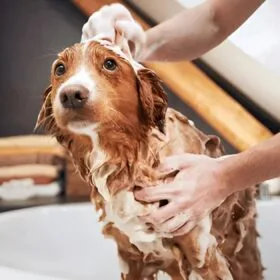
🛁 Step 2: Follow a Proper Bathing Routine
Before bathing: Brush coat, check skin, prepare tools
Bathing process:
-
Use warm water (37–38°C)
-
Lather shampoo separately before applying
-
Massage problem areas (neck, armpits, base of tail)
-
Leave on for 5–7 minutes
-
Rinse thoroughly until water is clear
After bathing: Dry immediately and brush while drying
🐕 Step 3: Daily Grooming Habits
-
Brush fur 10–15 minutes daily
-
Wipe paws and mouth after walks
-
Trim excess fur in belly and armpit areas
🧹 Step 4: Maintain a Clean Living Space
-
Wash bedding weekly
-
Sun-dry items to kill bacteria
-
Keep humidity between 50–60%
-
Use safe, biological odor neutralizers
🥦 Step 5: Adjust the Diet
Increase:
-
Fiber-rich vegetables: pumpkin, carrot
-
Low-sugar fruits: apples, pears (seedless)
-
Whole grains
Limit:
-
Fishy seafood
-
Processed red meat
-
Low-quality kibble
Add supplements: Probiotics, digestive enzymes, Omega-3
